Are Smart Locks Secure? Security Analysis and Facts
Two layers: physical and digital
Smart lock security has two distinct components. Physical security covers the mechanical lock mechanism and anti-tamper protection. Digital security covers encryption, authentication, and data handling. A well-designed smart lock strengthens both layers simultaneously.
Nuki's security architecture
AES-256 encryption
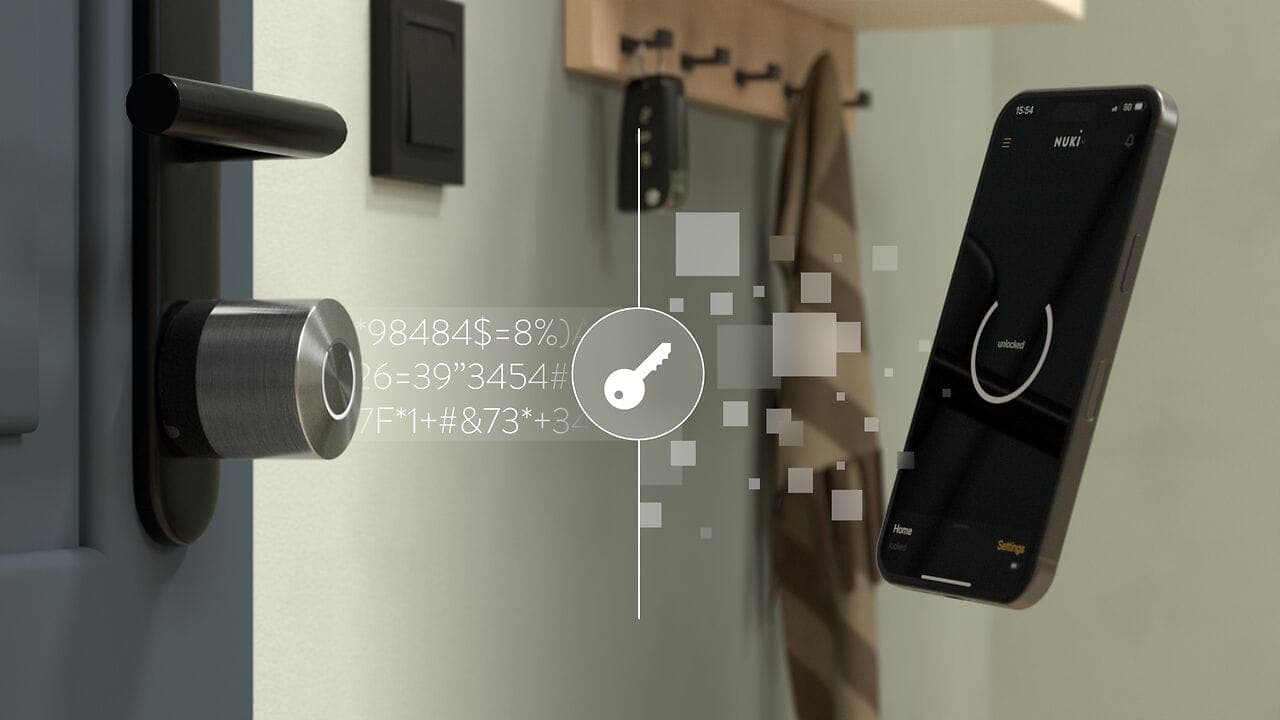
AES-256 is the encryption standard approved by the U.S. National Security Agency (NSA) for classified documents. A 256-bit key produces more possible combinations than atoms in the observable universe. Every command sent between the Nuki app and the lock is encrypted at this level.
Two-factor authentication (2FA)
Even if a password is compromised, account access requires a second verification step: SMS code or authenticator app. 2FA eliminates the vast majority of account takeover attempts.
GDPR-compliant data handling
Nuki stores all data on Austrian (EU) servers. Data is not shared with third parties and is processed in compliance with GDPR and KVKK requirements.
Anti-tamper protection
A vibration sensor detects physical attack attempts. On detection, the lock enters a security mode that resists forced entry.
AV-TEST certification
Nuki products carry AV-TEST certification: an independent security evaluation conducted by the well-known German testing institute. This confirms the security architecture is externally validated, not just self-attested.
Regular firmware updates
Nuki provides a minimum 5-year firmware support guarantee with monthly security updates, ensuring vulnerabilities are patched promptly.
Theoretical attack vectors and why they fail in practice
Bluetooth jamming
Theoretically possible but practically useless: Bluetooth range is ~10 meters and when jamming occurs, the lock stays locked. The attacker gains nothing.
Replay attack
Not possible. Nuki uses a rolling code scheme: every command contains a unique encrypted token that is valid for exactly one use. A captured signal cannot be replayed.
Account takeover via phishing
The risk is real but mitigated by 2FA. With 2FA active, a stolen password alone is not enough to access the account.
Best practices
- Activate 2FA on your Nuki account
- Use a strong, unique password (16+ characters, stored in a password manager)
- Keep the app and firmware updated
- Audit active access grants periodically and remove any that are no longer needed
- Set a physical backup key in a secure location (not a key box at the door)
- Secure your Wi-Fi with WPA3
Mechanical hardening: the Universal Cylinder
Nuki's Universal Cylinder, developed with M&C, defends against picking, bumping, drilling, and snapping. Rated SKG*** (highest Dutch security standard) and EN 1303. The cylinder is included with Smart Lock Ultra; it can be purchased separately for Go and Pro.
Conclusion
Smart locks used correctly offer meaningfully higher security than traditional locks: digital encryption on top of mechanical protection, detailed access logs that traditional locks cannot provide, and instant remote revocation of any access grant. The most common security risk is not the technology. It is user error. Enabling 2FA and keeping firmware updated addresses the vast majority of real-world risk.
Nuki smart locks
- Smart Lock Ultra: AES-256, AV-TEST, Matter/Thread, Universal Cylinder; 21,990 TL
- Smart Lock Pro (5th Gen): Brushless, bridge-free remote access; 17,590 TL
- Smart Lock Go: Entry-level, 9,990 TL