Keyless Entry Systems: Pros and Cons
What is a keyless entry system?
A keyless entry system replaces physical keys with electronic authentication, a smartphone, PIN pad, biometric reader, or NFC card, to control door access. The category includes retrofit smart locks (such as Nuki), standalone keypads, biometric readers, and NFC card systems.
Why keyless systems are growing
Three forces are driving adoption: changing lifestyles (more people working from home, managing rentals remotely), rising security awareness, and the sharing economy creating demand for flexible, remote-managed access.
Types of keyless entry systems
Smartphone-based systems
Bluetooth or NFC connects phone to lock. Enables Auto Unlock (door opens on approach), remote access, and access logs. The most feature-rich category when the phone is with you.
Keypad systems
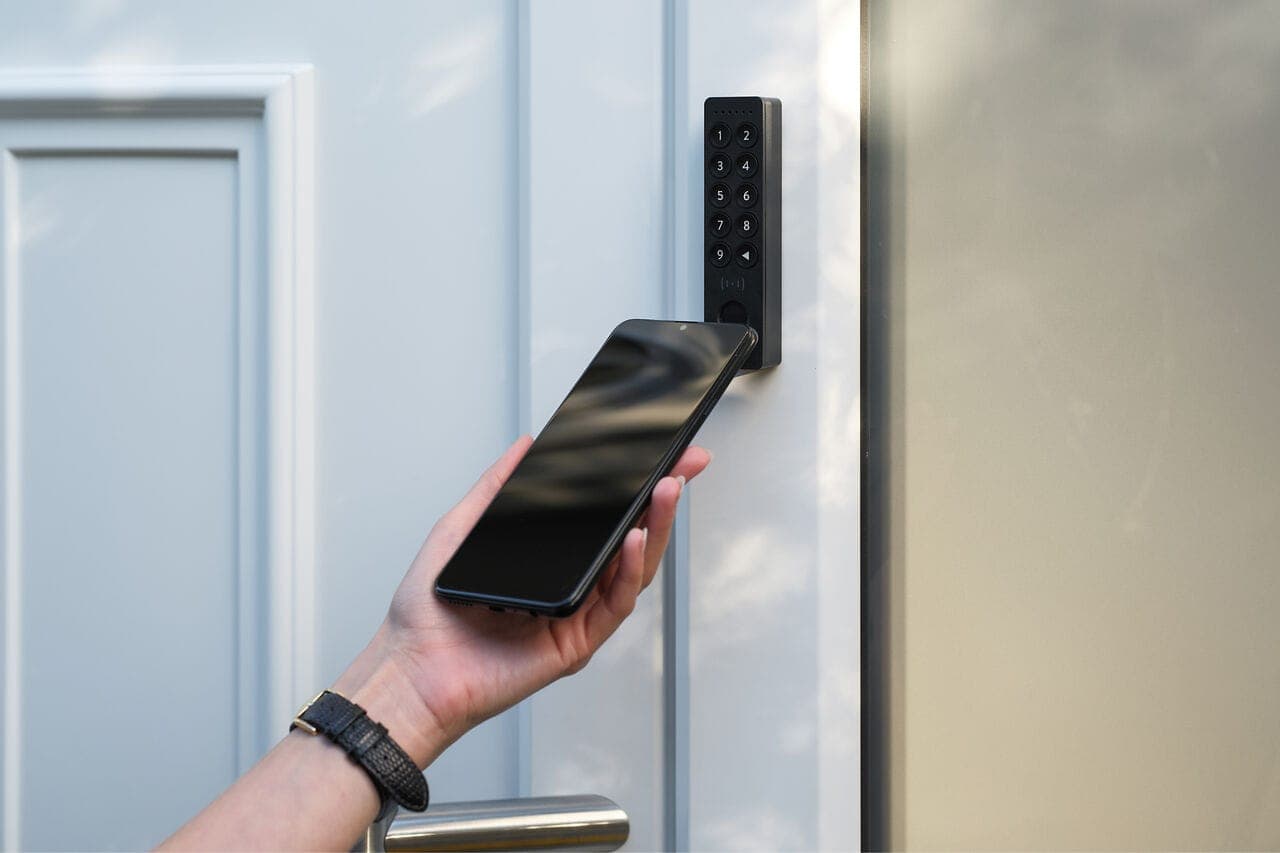
A PIN pad mounted outside the door. No phone required, universally accessible and practical in households with members of all ages. Codes can be permanent, time-restricted, or single-use.
Biometric systems
Fingerprint, face recognition, or retina scan. Cannot be copied or forgotten. The Nuki Keypad 2 includes a capacitive fingerprint reader that recognizes up to 20 fingerprints in under one second.
NFC card/fob systems
Card or key fob presented to a reader. Fast and simple, no code to type, no app to open. Works well as a secondary method alongside a primary access method.
Pros
- No lost-key anxiety: Digital access can be revoked instantly if a device is lost
- Flexible access management: Grant, restrict, or revoke access for any user without physical key exchange
- Detailed security logs: Every entry and exit recorded with date, time, and user identity
- Remote control: Lock or unlock from anywhere with an internet connection
- Guest and tenant access: Time-restricted codes for cleaners, contractors, or guests without handing over a key
Cons
- Power dependency: Smart locks require batteries (with low-battery warnings) or a power source
- Learning curve: Not all household members adapt at the same pace: Keypad PIN is the universal fallback
- Initial cost: Higher upfront investment than a standard mechanical lock
- Phone dependency for some features: Auto Unlock and remote access require a smartphone
The hybrid approach: Nuki's model
Nuki resolves most of the drawbacks with a multi-method approach. A single Nuki ecosystem supports: smartphone (Bluetooth/Wi-Fi/Matter), Keypad PIN, fingerprint, NFC Fob, and physical key. No single point of failure: if one method is unavailable, others take over. Data is encrypted with AES-256 and stored on EU servers, GDPR-compliant, with AV-TEST certification.
Summary
Keyless entry is a practical, security-positive step for most residential and commercial door scenarios. The main consideration is picking a system with enough backup access methods that a dead battery or forgotten phone never leaves you locked out. Nuki's hybrid model addresses this directly.
Nuki smart locks
- Smart Lock Ultra: Full connectivity (BT/Wi-Fi/Matter/Thread), Universal Cylinder; 21,990 TL
- Smart Lock Pro (5th Gen): Brushless motor, bridge-free remote access; 17,590 TL
- Smart Lock Go: Entry-level, 9,990 TL